
February 6, 2026 - PBS News Hour full episode
2/6/2026 | 57m 46sVideo has Closed Captions
February 6, 2026 - PBS News Hour full episode
Friday on the News Hour, the U.S. holds indirect nuclear talks with Iran amid escalating threats and a buildup of U.S. forces in the region. Mike Huckabee discusses Iran’s future and the next phase in the Gaza ceasefire. The effects of the Trump administration’s suspension of immigration visas for citizens from 75 countries. Plus, the athletes and games to watch at the Winter Olympics.
Problems playing video? | Closed Captioning Feedback
Problems playing video? | Closed Captioning Feedback
Major corporate funding for the PBS News Hour is provided by BDO, BNSF, Consumer Cellular, American Cruise Lines, and Raymond James. Funding for the PBS NewsHour Weekend is provided by...
Support provided by:

February 6, 2026 - PBS News Hour full episode
2/6/2026 | 57m 46sVideo has Closed Captions
Friday on the News Hour, the U.S. holds indirect nuclear talks with Iran amid escalating threats and a buildup of U.S. forces in the region. Mike Huckabee discusses Iran’s future and the next phase in the Gaza ceasefire. The effects of the Trump administration’s suspension of immigration visas for citizens from 75 countries. Plus, the athletes and games to watch at the Winter Olympics.
Problems playing video? | Closed Captioning Feedback
How to Watch PBS News Hour
PBS News Hour is available to stream on pbs.org and the free PBS App, available on iPhone, Apple TV, Android TV, Android smartphones, Amazon Fire TV, Amazon Fire Tablet, Roku, Samsung Smart TV, and Vizio.
Providing Support for PBS.org
Learn Moreabout PBS online sponsorshipAMNA NAWAZ: Good evening.
I'm Amna Nawaz.
GEOFF BENNETT: And I'm Geoff Bennett.
On the "News Hour" tonight: The# U.S.
holds indir.. with Iran amid escalating threats and# a buildup of U.S.
forces in the region.
AMNA NAWAZ: U.S.
Ambassador to# Israel Mike Huckabee discusses the## next phase in the Gaza cease-fire# and his hopes for Iran's future.
MIKE HUCKABEE, U.S.
Ambassador to Israel: Iran# is a real problem, and it's not just a Middle## East problem.
It's a problem globally.
If# Iran is serious about wanting to change,## this would be pretty dramatic after 47 years of# saying "Death to America."
Let's hope they can.
GEOFF BENNETT: And people affected by the Trump# administration's suspension of immigrant visas## for citizens from 75 countries speak# out about the impact on their lives.
(BREAK) GEOFF BENNETT: Welcome to the "News Hour."
Today, across two continents, the# U.S.
confronted two very.. nuclear challenges.
For the first# time since last year's war in Iran,## U.S.
and Iranian diplomats restarted diplomacy# focused on that country's nuclear program.
AMNA NAWAZ: And for the first time today,# the U.S.
accused China of conducting a secret## nuclear test just one day after letting the final# nuclear arms control treaty with Russia expire, Nick Schifrin been covering# both stories and joins us now.
So, Nick, let's start with the U.S.
and Iran.# What do we know about how those talks went today?
NICK SCHIFRIN: Well, the Trump administration# has provided no readout at the moment,## but in the lead-up to these talks, we heard# from Secretary of State Marco Rubio and## the top negotiator, Steve Witkoff, that Iran# must not make any nuclear fuel domestically,## must restrict the range of its ballistic# missiles, must end its support for proxy## groups and account for highly enriched uranium# that has been missing since last summer's strikes.
Today, the U.S.
held indirect talks.
You see# Witkoff there with the president's son-in-law,## Jared Kushner, meeting Oman's foreign minister,# who then met with Iran's foreign minister, Abbas## Araghchi, who said the talks focused on nuclear# weapons and were a -- quote -- "good start."
ABBAS ARAGHCHI, Iranian Foreign Minister: We were# able to exchange our viewpoints, to express our## concerns and our interests for a possible deal# between the two sides on our nuclear question.
NICK SCHIFRIN: Araghchi said there would# be a new round of talks.
No confirmation## of that from the U.S.
side, which for# the first time included the top U.S.## military commander from the Middle# East, a reminder, Amna, of President## Trump's threats against Iran and that# military buildup still in the region.
AMNA NAWAZ: So what do the experts tell you all of# that means for the possibility of an actual deal?
NICK SCHIFRIN: Well, that's the question# I put to Karim Sadjadpour of the Carnegie## Endowment for International Peace.
He# is very skeptical of any deal of Iran's## nuclear program, missile program, or support# for proxies, including Hezbollah and Hamas.
KARIM SADJADPOUR, Carnegie Endowment for# International Peace: The Iranian regime still## seems so intent on defying the United States# and they fear that if they give into pressure,## it's going to project weakness# and invite even more pressure.
Up until now Iran has shown no flexibility# on moderating its ballistic missile program,## or its regional proxies.
And# so the Iranian goal is to limit## this conversation only to nuclear and# even then to drag on the conversation.
NICK SCHIFRIN: Drag on the conversation, Amna,# so it doesn't get bombed by the United States.
A U.S.
official, though, confirms to# me that Iran is trying to reconstitute## its ballistic missile program.# Look at the before right there## and now look at the after of# a missile production facility.
Listen to distinguished scholar at# Middlebury College Jeffrey Lewis.## He's studied these kinds of images for years.
JEFFREY LEWIS, Middlebury College: We can# see those facilities in satellite images.## And so Israel attempted to destroy many of# those buildings, but now they're back.
It## seems pretty clearly that Iran is well on its# way to resuming production of its missiles.
NICK SCHIFRIN: And U.S.
officials, Amna,# acknowledge that could mean Israel,## if not the U.S., try and strike those# missile production factories again in 2026.
AMNA NAWAZ: Let's turn now to those allegations,## accusations of a secret nuclear test by China.# What exactly is the U.S.
saying happened?
NICK SCHIFRIN: Yes, so, for the first time today,## the U.S.
revealed that China conducted# explosive nuclear tests, including .. and sought to conceal them by putting the# explosion inside an underground chamber.
That would be China's first explosive test in# some 25 years.
Now, former senior officials## told me today that they have known about# that test for years.
So what's interesting## perhaps mostly today is the timing.
The fact# that China conducted that test has not been## declassified until today, which happens to# be the day after the U.S.
let New START,## the final nuclear arms control treaty, expire.
The Trump administration and some# experts have long argued that New## START wasn't adequate because it didn't# address China's growing arsenal.
And so## today it seems to be an attempt to try# and pressure China into some kind of## three-way talks with the United States# and Russia about arms control overall.
But, honestly, Beijing has always# resisted any kind of limits on its## nuclear program while it's growing# its arsenal, says Jeffrey Lewis.
JEFFREY LEWIS: China has largely resisted# entering any kind of formal talks,## partly because their number is lower than the# U.S.
and they're in the process of catching up.
But I think at a deeper and more profound# level, it's because all of the things we want,## predictability, transparency, these are things# that China thinks are bad for it, because China## is worried that, if we find them to be predictable# and transparent, that we will be more comfortable## pushing them around in a regional security crisis# because we will know where their red lines are.
NICK SCHIFRIN: Which means no trilateral# talks with China any time soon.
And, tonight,## I spoke to former Biden senior officials and# also Republican senior arms control officials,## and both argued to me that the# U.S.
should deploy more nuclear## warheads.
And now that New START has# expired, they can do exactly that.
AMNA NAWAZ: Nick Schifrin# starting our coverage tonight.
Nick, thank you.
NICK SCHIFRIN: Thank you.
GEOFF BENNETT: In the day's other# headlines: The White House defended,## then removed a racist depiction of the# Obamas from President Trump's social media.
It was posted shortly before midnight, and# it was met with anger from Democrats and## some members of the president's# own party.
The president's post,## which borrowed imagery from this video, was# deleted after backlash on both sides of the aisle.
The video on TRUTH Social focusing on debunked# claims about the 2020 election included a## racist animation of former President Barack# Obama and former first lady Michelle Obama,## their heads superimposed on the bodies of apes.
The president's post sparking# widespread condemnation from## lawmakers.
House Democratic Leader Hakeem# Jeffries said: "The Obamas are brilliant,## compassionate and patriotic Americans.# They represent the best of this country.## Donald Trump is a vile, unhinged# and malignant bottom feeder."
Republican Senator Roger Wicker:# "This is totally unacceptable.## The president should take it down and apologize."
And this from Senator Tim Scott: "Praying it was## fake because it's the most racist thing# I have seen out of this White House."
White House Press Secretary Karoline# Leavitt initially defended the actions## of her boss.
"This is from an Internet meme# video depicting President Trump as the king## of the jungle and Democrats as characters# from 'the Lion King.'
Please stop the fake## outrage and report on something today that# actually matters to the American public."
It should be noted there are no# ape characters in 'the Lion King.'
A few hours after Leavitt's defense, the# post was deleted.
A White House official,## speaking on the condition of anonymity,# said a staffer erroneously posted the video.
Mr.
Trump's political rise# included years of attacks on## former President Obama that centered on# conspiracy theories and racist rhetoric.
MAN: I am a registered Republican.
GEOFF BENNETT: One three-time# Trump voter today called into## C-SPAN to say the post was a breaking point.
MAN: What an embarrassment to# our country.
All this man does## is tell lies.
He is not worthy of# the presidency.
And I just want to## apologize to everybody in the country# for supporting this rotten, rotten man.
GEOFF BENNETT: Also today, the U.S.# has arrested a man, Zubayar al-Bakoush,## who is suspected of playing a key role in# the 2012 consulate attack in Benghazi, Libya,## that killed four Americans,# including an ambassador.
PAM BONDI, U.S.
Attorney General: Al-Bakoush# will now face American justice on American## soil.
We will prosecute this alleged# terrorist to the fullest extent of the law.
GEOFF BENNETT: U.S.
Attorney General Pam# Bondi, alongside FBI Director Kash Patel## and U.S.
attorney Jeanine Pirro, told reporters# Zubayar al-Bakoush was extradited to the U.S.## and was indicted on eight counts, including# murder, arson and terrorism-related charges.
Another man, Ahmed Abu Khattala,## who is suspected of masterminding the 2012# attack, was captured in 2014 and convicted.
In Pakistan's capital city, officials say a# suicide bomber targeted Shiite worshipers in## a mosque during Friday prayers.
The blast, in# a densely populated area on the outskirts of## Islamabad, killed at least 31 people and wounded# over 160 others.
The bombing was the second## major attack in the capital in recent months.
The# Islamic State claimed responsibility for today's## suicide blast and have targeted Shiite Muslims,# a minority in the country, in previous attacks.
The FBI and Arizona law enforcement say# they are aware of and looking into the## authenticity of a new message concerning Nancy# Guthrie, the 84-year-old mother of "Today Show"## host Savannah Guthrie.
The search for# Guthrie entered its fifth day today.
CAMRON GUTHRIE, Son of Nancy Guthrie:# Whoever is out there holding our mother,## we want to hear from you.
We# haven't heard anything directly.
GEOFF BENNETT: On social media last# night, Savannah Guthrie's brother,## Camron, renewed the family's pleas for# their mother's potential kidnapper to## contact them.
Investigators still# have not identified any suspects or## persons of interest.
The FBI had said an# alleged ransom note had demanded money by## an initial deadline of yesterday evening.# The note has a second deadline of Monday.
On the Wall Street today, stocks surged# in a massive end-of-week rally.
The Dow## Jones industrial average shot up# 1,200 points to top 50,000 for the## first time ever.
Chip companies helped# drive the surge, sending the Nasdaq up## by 2 percent, and the S&P also rallied# 2 percent for its best day since may.
And Hall of Fame quarterback Sonny Jurgensen# has died.
Over an 18-year NFL career with## the Philadelphia Eagles and the Washington# Commanders, then known by a different name,## the prolific passer piled up# franchise records with both teams.## His career-defining legacy in Washington# made him a celebrity in the nation's capital.
After his playing career, he became a# broadcast analyst for another 38 years.## Jurgensen was inducted into the Pro Football# Hall of Fame back in 1983.
He died of natural## causes in Florida after a brief stay in# hospice.
Sonny Jurgensen was 91 years old.
Still to come on the "News Hour": the White# House launches a new Web site aimed at## lowering prescription drug prices; Kathleen# Parker and Kimberly Atkins Stohr weigh in on## the week's political headlines; and# sports journalist Christine Brennan## joins our podcast to preview the athletes we# should be watching at the Winter Olympics.
As the Trump administration advances# its vision for rebuilding Gaza and## reshaping how the territory is# governed, uncertainty looms over## what comes next as the cease-fire moves# into its next phase.
Critical issues,## from security and humanitarian access# to political control, remain unresolved.
Earlier today, I spoke with U.S.# ambassador to Israel Mike Huckabee.## I began by asking him what success looks# like in phase two of the cease-fire and## how the administration plans to measure progress.
MIKE HUCKABEE, U.S.
Ambassador to Israel: Well,## I would tell you it's already wo.. we haven't had to rush down to the# shelter and dodge a ballistic missile.
So the cease-fire itself has been quite# successful.
Everybody in Israel is## breathing a sigh of relief.
They're# putting their kids to bed at night,## tucking them in and not thinking they're going# to wake up in the middle of the night to a siren.
All the hostages are back.
I think you# would have had a hard time convincing## anyone in Israel if you would have told them# 4.5 months ago that every hostage would be## back.
As phase two starts, it's going to be# a methodical process, but it is under way.
The Board of Peace is established.
The# technocratic government is being formed.## The one big peace that still has to# happen is the disarmament of Hamas,## but I think that's on the way# as well.
And it's progress.
GEOFF BENNETT: Meantime, the Rafah Crossing# has reopened, but the number of Palestinian## medical evacuees has been limited.# Why is that process moving so slowly?
MIKE HUCKABEE: Well, it's a difficult thing to# get people in and out safely.
They have to be## properly vetted so that you don't bring# terrorists in or take terrorists out.
There's a legitimately diligent effort to get# this done.
But we're talking about people who are## vastly displaced, people who are displaced because# Hamas extended this war long before it should## have been extended.
People are still adjusting# to the fact that Gaza is basically a rubble.
Once again, Hamas could have ended# this long before the destruction,## but they didn't.
They wanted to hold hostages# and torture them and starve them and make it## difficult for them.
And I'm hoping that,# when they disarm and we get rid of them,## things will start progressing much more rapidly.
GEOFF BENNETT: You mentioned the president's# newly announced Board of Peace earlier.
There## are critics who say that it effectively# sidelines multilateral organizations.
What problem is the Board of Peace meant to solve# that existing international organizations cannot?
MIKE HUCKABEE: Well, the Board of# Peace is a different kind of board,## in that it is made up of people who# have chosen to be a part of it and## people who want to actually do some heavy# lifting and making Gaza livable again.
I don't know of any other organization# internationally that is that committed## to doing something right.
We saw here# in Israel what happened when the United## Nations was in charge of the food program.
It# was absolutely dismal; 92 percent of the food## that was supposed to go to people who were hungry# ended up getting looted or stolen or hijacked.
And those are the U.N.
's own# numbers.
That was last summer.## So the Board of Peace is supposed to# try to make this much more effective## and efficient and put people in charge# that actually know how to run something.
GEOFF BENNETT: Is the administration# moving away from the U.N.
model altogether?
MIKE HUCKABEE: I wouldn't say that.
I think# we recognize -- I'm not a big fan of the U.N.
It seems to be cumbersome, expensive, and not# all that effective, but it has its purpose.## But there needs to be a much more lean operation# in order to get Gaza on its feet.
And I think## that it's not something that you can just say# to nations, say to Iran or North Korea, I'm## sure you guys will have a really noble experiment# here, and you will want to do it the right way.
So this is going to be a board of# people who not only want to be on it,## but who, quite frankly, meet the# criteria of wanting to do it right.
GEOFF BENNETT: On the matter of Iran,# have you been briefed on how the talks,## the Iran talks, went in Oman today?# And we know that the prime minister,## Netanyahu, has said that Iran cannot be trusted.
Is there a deal that you# believe Iran can commit to?
MIKE HUCKABEE: That's hard to say.
Geoff, it's something I hope happens.
And I#.. look, nobody would like to see a negotiated peace# more than I would, because, if we have a war,## I'm going to be right in the center of# it.
And I would just as soon pass from## that.
I have been here less than a year as# ambassador, been through four wars already.
But will Iran agree to something?
And will they# agree to what the president has laid fourth,## which is, you don't have enrichment,# you don't have nuclear weaponry,## and you're going to have to deal with# this incredible array of ballistic## missiles that you keep building up,# because you're threatening the world?
And through not just Iran, but their proxy# organizations, they have created havoc.## And then if you add to that the number# of people they have murdered in their own## streets because they were protesting the# lack of food and water, let's be honest,## Iran is a real problem.
And it's not just a# Middle East problem.
It's a problem globally.
GEOFF BENNETT: Well, what is the U.S.
prepared# to do?
You have said that the president will## not disappoint the Iranians who put their lives# on the line as they protest the Iranian regime.
MIKE HUCKABEE: One thing I'm# confident about this president,## he makes a promise and he keeps it.
He# told Iran last summer that they could## do it the easy way or the hard way.
They# didn't listen.
They did it the hard way.
And he sent B-2 bombers in through the# Operation Midnight Hammer.
You would## think they'd learned something.
I often say# that in the South, where I grew up, Geoff,## we say there's no education in the second# kick of a mule.
They got a real kick of a## mule last summer.
I'm wondering, did# they get any education from that one?
If not, they may stand behind the# mule again.
And there probably won't## be much education in the second kick of a mule.
GEOFF BENNETT: As we wrap up our conversation# here, I wonder.
So many Americans,## how they currently understand Israel# is shaped by its response to Hamas.
What do you worry gets lost about# Israel, its society, its values,## when the country is viewed almost# exclusively through this lens of war?
MIKE HUCKABEE: I think Americans are pretty# naive if they don't understand that Israel## had hostages being held in tunnels who were# being tortured, starved, raped and beaten.
If America had hostages, and it was the sons# and daughters of Americans, do you think we## would stand by and just say, well, I hope they# could let loose someday?
We would be scratching## and working, and we would be doing everything# we possibly could to get those hostages out.
Israel gets blamed for a lot of stuff.# They didn't start the war.
Hamas did on## October the 7th.
And they didn't just# murder 1,200 civilians.
They butchered## them.
What I wish Americans would do is# to look at this honestly and objectively.
I wish they would understand who is at fault, why# it went as long as it did, and ask themselves,## if this was your son, your daughter being held# in those tunnels, raped and tortured, would you## stand by idly, or would you do whatever it took# to bring an end to it and get your children home?
GEOFF BENNETT: The U.S.
ambassador to Israel,## Mike Huckabee, thank you for# your time, sir.
We appreciate it.
MIKE HUCKABEE: Thank you, Geoff.
AMNA NAWAZ: A new Web site, TrumpRx, that the president says#will help Americans buy lower-priced prescription## drugs is now online.
The site lists drugs that# reduced rates with coupon codes to be used## at participating pharmacies or directly through# manufacturers' Web sites.
It's part of his pledge## to lower drug prices in the U.S., where consumers# tend to pay much more than their European peers.
Stephanie Sy has more.
STEPHANIE SY: Amna, TrumpRx currently has# about 40 brand name medications on offer## from five companies, including popular# weight loss and infertility treatments.
At an event yesterday, the# president called it one of## the most transformative health# care initiatives of all time.
DONALD TRUMP, President of the United# States: This launch represents the## largest reduction in prescription# drug prices in history by many,## many times.
And it's not even close.
You're going# to see numbers that you're not going to believe.
STEPHANIE SY: But health policy experts# caution the impact would likely be muted,## especially for the 85 percent of Americans# who have prescription drug coverage.
With more, we're joined now by Dan Diamond,## a reporter for The Washington Post, who# focuses on policy and public health.
Dan, it's good to see you.
So, talk about how TrumpRx works# in practice.
It's not a Web site## that sells drugs direct to consumer,# but it's more for information, right?
DAN DIAMOND, The Washington Post:# Yes, it's a government program,## a government Web site intended to help Americans# get discounted prescri.. be directed to a manufacturer's Web site.# You can print out a coupon in some cases,## maybe even call a pharmacy directly# and get the drug sent in the mail.
It's more about information than# actually purchasing the medication.
STEPHANIE SY: What kinds of drugs are# available at these discounted prices## right now?
Why these specific drugs?# And are more expected to be added?
DAN DIAMOND: The Trump administration has# negotiated with 16 different pharmaceutical## companies.
Some of those companies have# put their drugs on this Web site so far.
So, Novo Nordisk, which makes drugs that are# used for weight loss like Ozempic and Wegovy,## you can go on the Web site and find access# to discounts on those drugs.
EMD Serono,## which does fertility medication,# there's significant discounts for drugs## there as well, and then other drugs# around diabetes, thyroid medication.
But, notably, a lot of these drugs are# older and there are generic alternatives## for these medications.
The pharmaceutical# companies that are participating were not## looking to give discounts on their# bestsellers, their newest drugs.
So, in many cases, these are drugs where there# might have already been discounts available.## And if you go on the Web site and look, there# is a warning even, and if you have insurance,## you might be able to get a discount that is# better than what is available through TrumpRx.
STEPHANIE SY: Plus, most Americans have insurance## where co-pays may be less than even the# discounted price of these drugs, right?
And yet not all insurance policies cover these# really popular weight loss and fertility drugs.## Is that where experts say we're likely to see# the greatest impact on consumer benefit, Dan?
DAN DIAMOND: I think so.
I think that's where there has been.. obesity access.
I talked to folks# in Bernie Sanders' office when that## announcement happened.
Even they were saying this# is something that would benefit many Americans.
The challenge, I think, is that there are# many drugs that are not listed here.
I mean,## if there are 43 drugs or so listed on the Web# site right now, that is a tiny, tiny fraction of## the medications that many Americans need.
And the# question is, how fast will more drugs come online?
The Trump administration has said they're# trying to add more.
But as of right now,## the benefits are limited really# to the categories you highlighted.
STEPHANIE SY: Will TrumpRx have any# larger impact on other drug prices?
DAN DIAMOND: I think the effort# that the administration has made## that goes beyond the Web# site is what I'm watching.
So the president and his deputies, I# think to their credit, have tried to## bend the ear of pharmaceutical companies# on these high drug prices.
They have gone## to foreign leaders and asked them to raise# the price of drugs overseas to help carry## the cost of research and development here.
So# TrumpRx is a part of that broader strategy.
If TrumpRx does have more drugs available,## if it is expanded to the 90 percent or so# of Americans who have health insurance,## then it would be more beneficial.
But# there is a broader strategy here too.
STEPHANIE SY: You have also written, Dan,## about the politics of this move by Mr.# Trump.
It'.. as the most impactful prescription# drug reset in history.
And, of course,## it fits into his broader agenda to convince# Americans he's helping make life more affordable.
Will enough Americans feel the benefit of## this program in coming months to# help the president make that case?
DAN DIAMOND: That's a great question.
So Republicans historically have lagged behind# on health .. There are polls, I saw one from KFF, a reputable# firm, recently that found a double-digit lead## for Democrats on most health care issues, who# do you trust to handle your health insurance?
But on the issue of prescription drugs,# it has narrowed.
I think Republicans were## only lagging behind by five points, which# suggests that there is a messaging success## potentially for Republicans.
But health# care has always been a crucial issue## when voters go to the polls.
Republicans# are trying to make this more of their issue.
And that's why this has been such a ballyhooed# event by the White House, why they had Dr.## Oz walking people through this televised# infomercial almost to show how TrumpRx worked.
STEPHANIE SY: That is Dan# Diamond with The Washington Post.
Thanks for joining us, Dan.
DAN DIAMOND: Thank you.
GEOFF BENNETT: This week, the# Trump administration was sued## for a sweeping pause of immigrant visa# processing for people from 75 countries.## The freeze, which started last month,# was aimed at nations the administration## said -- quote -- "whose migrants take welfare# from the American people at unacceptable rates."
This comes on top of full or partial travel and# visa restrictions on citizens from 39 countries,## which federal officials say are necessary to# prevent overstays and protect national security.
Liz Landers has more on the impact.
LIZ LANDERS: The travel bans and visa# suspensions have upended routine work,## marriage, and family visa processes, leaving# many U.S.
citizens across the country in limbo.
Over the last few weeks, we have spoken with# some of them, including one man who asked us## not to use his name because he worries it might# affect his Brazilian husband's visa application.
SAMANTHA CUFFY, Second-Generation# Immigrant: Hi, my name is Samantha Cuffy.
DAVID ZWISOHN, Former Client of Caretaker# From Sierra Leone: I'm David Zwisohn.
CHRIS JOONDEPH, U.S.
Spouse of Nigerian# Citizen: My name is Chris Jo.. ASHLEIGH RAMOS, U.S.
Spouse of Moroccan# Citizen: My name is Ashley Ramos.
I recently remarried three years ago# to my husband, who is from Morocco.## I am a mom of five and I'm a public# schoolteacher that teaches Spanish.
SAMANTHA CUFFY: My entire family actually are# originally from the island of Dominica and## migrated here in the late '80s, early '90s, and# I was born shortly after.
And I have enjoyed the## fruits of their labor and their working hard and# going through the citizenship process and doing## everything they can to be able to achieve# their own version of the American dream.
CHRIS JOONDEPH: My wife and I met on# my first trip out to Nigeria in 2021.## I'm a travel content creator, and I had been# trying to visit every country in the world,## but we had stayed in touch.# As our relationship developed,## we eventually decided to get married in May# 2024, and we immediately filed our petition.## And we're currently waiting on our visa for# her to come join me in the United States.
ASHLEIGH RAMOS: I met my husband through# a language exchange app.
He was learning## English.
I was trying to learn Moroccan# Arabic specifically.
He just became part## of my everyday life, my kids as well# through our video chats and lessons.
I have been to see him now four times.# I'm going again in about two weeks.
He's## the most emotionally supportive# partner you could ever ask for.## And we have been waiting a long time.# And we thought we were almost done.
DAVID ZWISOHN: I'm totally responsible# for caring for our 25-year-old special## needs daughter.
My daughter is completely# dependent, and she will be her entire life.## And we have a 27-year-old son who's# slightly on the autistic spectrum.
We had gotten the services of what they# call a direct support care provider,## and her name was Jennifer (ph).
And she# had worked with us from mid-June, I think,## mid-June 2025 up until last Friday.
And she# is from the country of Sierra Leone.
And## Sierra Leone is on the Trump# administration's banned list.
MAN: I'm a U.S.-born citizen.
My husband# is a Brazilian citizen.
We met at a bar.## And it was as cheesy as a pickup line and# talking.
When we decided to get married,## we wanted to make sure we did everything legal.# We wanted to make sure we did everything right.
ASHLEIGH RAMOS: I think the average# American really doesn't know what this## process is.
And this right here, this is# what I have given in support of our case.## This is to show the relationship, but# also to prove my financial standing,## his ability and potential to have gainful# employment when he comes.
It's very expensive.
CHRIS JOONDEPH: We had kind of expected it to# take about two years and possibly be getting## that visa in May of this coming year.
But now# that looks like it's sort of on indefinite delay.
Our visa won't get denied, but it's just# going to be put on hold.
It's not going to## be processed.
And so we're just kind of sitting# here without any idea kind of where that ends.
SAMANTHA CUFFY: When I saw Dominica on that# list, it was honestly a shock.
Folks are## really terrified, because they're, like, I# don't know when next I'm going to be able to## see my family.
I don't know if I'm going to be# able to move freely even within this country,## like, people who are citizens# feel like just because the fact## that they have an accent or that# they look a little bit different.
ASHLEIGH RAMOS: This really felt like the door# slamming shut and it was just immediate panic.
MAN: What do we do?
Where do we go?# There's no -- there's no instruction.## There's no information.
There's just a blanket# thing saying there's going to be a pause.
DAVID ZWISOHN: Finding a replacement for Jennifer# is much harder than most people would realize.## The load on me is tremendous.
It's a# struggle to be able to get enough sleep,## a struggle to continue eating well,# and that's critical.
It's not just my## daughter and my son.
I have to take care# of myself in order to take care of them.
CHRIS JOONDEPH: You feel like it's this punitive## policy that doesn't really# go about doing what it says.
If you need to vet people more, then# vet people more.
But to just say, no,## we won't even take a look is a real gut# punch.
And it feels like you're let down.
ASHLEIGH RAMOS: I think,# when people see the pause,## they assume this is protecting us in some# way from foreign invaders or stopping## illegal immigration.
And that's not the case.# This is preventing families from being together.
MAN: My plan was to bring my family to the United# States and to build.
Now the only option seems to## be leave.
That is the worst feeling.
And you# should never feel punished for loving someone.
LIZ LANDERS: For more on these# restrictions, we are joined by David Bier,## director of immigration studies# at the Libertarian Cato Institute.
David, nice to have you back on "News Hour."
DAVID BIER, Director of Immigration Studies,# Cato Institute: Thanks for having me on.
LIZ LANDERS: Let's start# with what that report showed.
It's -- obviously, this is impacting# a wide range of Americans.
Who is this## affecting right now and has the United# States seen policies like this before?
DAVID BIER: Well, we absolutely have seen# policies like this before during the first## Trump administration, when he basically# shut down almost all visa processing in## 2020.
That was -- created a huge backlog# of people who had to be processed under## the Biden administration for -- put# people in very similar situations.
I encountered people who had to actually move out# of the United States to be with their loved one## in another country.
And we're seeing similar# decisions being forced upon people today.
If## you look at the totality of it, about half of# all legal immigration, permanent immigration## from abroad, has now been banned by these# policies, so one out of every two immigrants.
If you look at African immigrants in# particular, legal immigrants, again,## it's almost 70 percent of legal immigrants# from -- you're looking at the statistics## from 2024 -- have now been banned by# this administration.
Over 100,000 of## the 300,000 or so who are now affected by this# policy on an annual basis are the spouses and## minor children of legal permanent residents# and U.S.
citizens, so very close relations.
We haven't seen anything --# outside of the COVID-19 pandemic,## we haven't seen anything as# severe as this restriction.
LIZ LANDERS: The State Department has cited# concerns that some of the immigrants were at## high risk of becoming a drain on the# welfare system.
How vetted are these## immigrants?
And is there evidence# that that is actually a problem?
DAVID BIER: No, absolutely not.
You have# to have a financial sponsor in the United## States who is willing to take ownership of# you.
You are also banned from accessing any## means-tested benefits for the first five# years that you are in the United States.
And so there's both the restriction on accessing# the benefits and you also have someone who's there## who has to prove their ability to financially# support you.
And if you look at the immigration## system as a whole, we've now banned half of# the legal immigrants to the United States.
We have estimated that the immigrant population# over the last 30 years has reduced the deficits## by $14.5 trillion over that 30-year period.
So# immigrants, legal immigrants who are coming here,## coming to work, coming to support themselves are# a benefit to the United States, reduce deficits,## and ultimately support the# American system of government.
LIZ LANDERS: The visa pause affecting nationals of# these 75 countries is currently being challenged## in court.
What do you make of the legality# of the government's blanket pause here?
DAVID BIER: Well, if you look at# the Immigration and Nationality Act,## one of the fundamental questions that Congress# was trying to resolve for almost four decades## from the 1920s to the 1960s was whether we were# going to discriminate based on nationality.
They put a provision in that law that# says you cannot discriminate against## visa applicants based on their nationality.# The administration is openly flouting that## restriction and basically daring the Supreme Court# to strike it down and say that this is illegal.
They have already sort of gotten the# Supreme Court's OK on part of the ban## for 40 countries because the president signed# an executive action proclamation saying he is## ordering them being suspended.
But 75 of# the over 90 countries affected by this,## it's just effectively the secretary of# state's tweets who are banning these people.
This is not some formal policy from# the president of the United States.## So I think the litigants here will have# a stronger case because it's really not## a formal policy adopted in# any kind of formal manner.
LIZ LANDERS: You recently wrote for Cato# -- quote -- "that President Trump is## leading the most anti-legal immigrant# administration in American history."
What does that mean?
How so?
DAVID BIER: Well, not only are we banning about# half of the .. this policy.
We have also effectively shut# down the refugee program for about 125,000## individuals who would have otherwise been able# to immigrate legally as refugees from abroad.
He's also shut down the Diversity Visa# lottery which is basically the only way## that many people without family connections# can immigrate legally to the United States.## He has, in addition to those actions, shut# down the legal ways for people to apply## for asylum at the U.S.-Mexico border# and enter the country legally there.
So, overall, he's reduced legal# immigration far more than he's reduced## illegal immigration into the United# States during his first year in office.
LIZ LANDERS: David Bier, thank# you so much for joining us.
DAVID BIER: Thanks for having me.
GEOFF BENNETT:## For more now on the fallout from President# Trump's call to nationalize elections and## his immigration crackdown, we turn tonight# to the analysis of Atkins Stohr and Parker.
That's Kimberly Atkins Stohr, senior opinion# writer and columnist at The Boston Globe,## and Kathleen Parker, a columnist with# The Washington Post.
David Brooks and## Jonathan Capehart are away this evening.
Good evening.
It's great to see you both.
KATHLEEN PARKER, The Washington Post:# Good evening.
Nice to be.. GEOFF BENNETT: So President Trump is# openly talking about nationalizing voting,## something that is plainly unconstitutional.
He's# doing this months before the midterm elections.
Kimberly, do you hear this as bluster# or a deliberate attempt to undermine the## elections and then seed doubt about the# legitimacy of future election results?
KIMBERLY ATKINS STOHR, The Boston Globe:# I think it's definitely the latter, Geoff.
We have seen Donald Trump since before his first# term, even before he won the election in 2016,## casting doubts and disparaging with# no -- with absolutely no evidence,## the U.S.
voting systems and claiming fraud,# either as a hedge before the election he may## think may go badly for him or as a way to# disparage the results after they happen.
That has been part and parcel.
And it's really# dangerous.
I mean, this call is not just a call## to nationalize elections, which, as you point out,# the Constitution makes very clear that elections## are handled, by and large, by states, with# the federal government playing a minimal role.
But I'm concerned about call -- not denying# that ICE will show up at election stations,## that the call for this increasing redistricting,## mid-decade redistricting in states in order to# try to game the system.
Elections are supposed## to be sacred in any functioning democracy.
And# that the president of the United States is the## one making the call to disparage them and# try to rig the system is really alarming.
GEOFF BENNETT: Kathleen, to Kimberly's point,# we have seen this from President Trump before.## How much this time feels more organized# and, because of that, more dangerous?
KATHLEEN PARKER: I agree.
It is more organized.
And everything he does in terms of,# he's trying to undermine confidence## and faith in the electoral process all# along.
And with this whole -- now he's## still clinging again to the 2020 -- we know# it was a fully regular election he lost.
And## he can't let it go because I think he's# taken a page from "Mein Kampf," frankly,## the saying that if you say -- tell a big lie often# enough and repeat it, then people will believe it.
And the theory was further refined by# the propaganda head in Nazi Germany,## Mr.
Joseph Goebbels.
And the idea is,# apparently, it's true that -- they would know,## I guess -- that people will believe a big lie# quicker than they will believe a small lie.
So Trump goes big with everything he does,# big beautiful bills, big beautiful lie.
And## I think he's just going to keep going# and going and trying to make people## lose confidence.
Maybe they stay# away from the polls.
Maybe they## get together and his MAGA troops will come# together and challenge the election results.
I think you're right that ICE will show# up and I think the activists and the MAGA## troops, so to speak, will be present at# many polling places.
So it's very dangerous,## because where does that lead, ultimately?
It# gives Trump an opportunity to say -- maybe## it gives him an opportunity to challenge the# next election, whether it's the midterms or the## presidential election in 2026, assuming# he allows it to come -- to take place.
GEOFF BENNETT: On the matter of ICE potentially# at polling places, our White House correspondent,## Liz Landers, asked that question at a# White House press briefing this past week,## because it was Steve Bannon who floated it, and# the White House didn't rule it out.
Here's that.
LIZ LANDERS: Thank you, Karoline.
Steve Bannon recently said -- quot.. come November."
Is that something# that the president is considering?
KAROLINE LEAVITT, White House Press# Secretary: That's not something I## have ever heard the president .. LIZ LANDERS: So, you can guarantee# to be American public that ICE wi.. not be around polling locations# or voting locations in November?
KAROLINE LEAVITT: I can't guarantee# that an ICE agent won't be around a## polling location in November.
I mean, that's,# frankly, a very silly hypothetical question.
GEOFF BENNETT: And you can argue it's# not a hypothetical question.
It's not## a rhetorical question, because, in many ways,# this is a multifront strategy, legal pressure,## DOJ demands, raids at the Fulton County# election office.
How do you see it?
KIMBERLY ATKINS STOHR: That's exactly right.# And we can use another historic analogy,## which is during Jim Crow, the fact# that police were often sent around## polling stations in order to discourage# people of color from casting votes,## even though the Constitution was amended# to specifically protect that right.
The law won't protect you if you don't# have government that is backing it up## and actually flouting it.
So all of this is from# playbooks from the darkest times in our history,## and they can't be ignored.
I'm concerned about# it, because I don't want people -- once people## lose faith in their elections, that's a big# pillar of democracy that falls in itself.
GEOFF BENNETT: On the matter of the president's# immigration agenda, we have some fresh polling## data.
Six in 10 Americans disapprove of the job# ICE is doing, while about three in 10 approve.
And## opinions about the agency and its actions are# sharply divided along political lines, as you## might imagine; 91 percent of Democrats, 66 percent# of independents register their disapproval.
Republicans, though, remain supportive with# 73 percent approving of the agency's work.
Kathleen, why is that?
Has ICE become an# identity issue, rather than a policy issue,## the way that they are carrying# out the president's agenda?
KATHLEEN PARKER: Well, I don't really know# exactly how to answer that, but I think that I'm## first surprised that that number of representative# Republicans are approving of what we're watching.
And I think the image of that little boy was# so powerful.
And I think Americans generally## saw that and thought, well, no, we can't# have that in this country.
That's not what## we do here.
And the image is powerful.
And I# think, when we look at the elections coming up,## the midterms, you're going to see a lot# of people turn out on the ICE issue,## whether it's -- I don't know what you meant# exactly by whether it's an identity question.
But I do think it's definitely a pivotal# voting issue that will have legs through## the midterms and possibly thereafter, depending# on how they change their behavior, if they do.
GEOFF BENNETT: And this is a# live issue on Capitol Hill,## because Democrats and Republicans right# now are debating how ICE can carry forward## with the president's immigration# approach as part of its funding.
And yet it appears Democrats have folded# on their demand that ICE agents not wear## masks.
Chuck Schumer said, well, they can# wear masks if it's an unusual circumstance.## And they're also not including in their demands# this notion of what we were talking about before,## that ICE doesn't show up on# Election Day at the polls.
This comes back to this issue why# Democrats aren't as tactically## ruthless on the things that they say they# care about as compared to Republicans.
KIMBERLY ATKINS STOHR: I# think that's exactly right.
And at this moment, when we're talking about# a partial sh.. now has been funded.
They did a good job of# carving out this issue so that they could hold## firm.
I think if Democrats do anything other than# completely hold the line on what they have seen,## the snatching up of men, women and children,# deporting them without full due process,## American citizens being targeted -- two American# citizens dead on the streets of Minneapolis.
If this is not the issue where Democrats can say,# no, we hold the line and we are not giving an## inch on this, not because it's politically right,# but because it's morally right, I just don't know## what it is that they're doing.
They should maybe# consider giving their jobs to someone who will.
GEOFF BENNETT: How do you see it?
KATHLEEN PARKER: Well, I do think Republicans te.. But I think if the Democrats force the hand# and the government has to shut down partially,## it's going to send -- well, it'll make# Donald Trump very happy because he## will have chaos again.
And he's the# captain of chaos.
But so many other## agencies within the Homeland Security# Department will be affected, FEMA, TSA.
I mean, people are going to be stranded at# airports and, again, we will have all sorts of## travel issues.
And there's even other things.# The Coast Guard, I think, would be docked.
GEOFF BENNETT: Yes.
Well, you mentioned airports.
I#want to squeeze in this last topic, President Trump offering to unfreeze roughly# $16 billion in federal infrastructure funds## already appropriated for the Gateway Hudson# River tunnel project.
But this is only if,## according to the reporting, the Senate minority# leader, Chuck Schumer agrees to rename both## Washington Dulles International Airport and# New York's Penn Station after Donald Trump.
Kimberly, you have been shaking# your head left or right, no.
(LAUGHTER) KIMBERLY ATKINS STOHR: You know, it's just# .. we're talking about, the president is still so# concerned about his own vanity and pettiness,## that he probably can't stand the fact that DCA# is named after Reagan and he wants one too.
I mean, really, this is what# he's spending his time on.
KATHLEEN PARKER: Well, he# may actually deserve Dulles## Airport.
As we were talking about earlier... (LAUGHTER) KIMBERLY ATKINS STOHR: It is a terrible airport.
KATHLEEN PARKER: ... it's# not the .. KIMBERLY ATKINS STOHR: No.
KATHLEEN PARKER: But.. in childhood?
Can we just give him a# daily participation trophy, perhaps?
(LAUGHTER) GEOFF BENNETT: K.. KIMBERLY ATKINS STOHR: Thank you.
AMNA NAWAZ: The 2026 Winter Olympics are now officially# under way after the Opening Ceremony in Milan, which is co-hosting with the city of Cortina.
Today's star-studded spectacle featured# performances by Mariah Carey and Andrea Bocelli,## among others.
About 2,800 athletes from# more than 90 countries are taking part.
And this week's episode of our podcast# "Settle In," is all about the Games and## what you need to know.
I spoke with Christine# Brennan of USA Today before she flew to Italy## for more on the Games, the athletes, and the# world coming together in an uncertain era.
Let's talk about some of the big# storylines to watch, because there's## so many fascinating personalities and# so many potentially exciting moments.
Let's start with women skiing and Mikaela# Shiffrin, because if you are someone like## me who loves a redemption story or loves# a comeback, this could be the one, right?
CHRISTINE BRENNAN, USA Today: Absolutely.
AMNA NAWAZ: Tell us about Mikaela.
CHRISTINE BRENNAN: Mikaela# Shiffrin is only 30 year.. She's lived a lifetime or two or three# early success, Sochi and PyeongChang,## and then absolutely a devastating# Olympics in 2022, where she just... AMNA NAWAZ: Broke my heart to watch.
CHRISTINE BRENNAN: And you and probably millions# of people watching.
No, and just had a terr.. run of bad luck, didn't finish.
Everything that# she had done so beautifully over the time she'd## been in the public eye, it all fell apart.# Everything that could go wrong did go wrong.
But a great -- why people love her so much and why## she is such a terrific role model and# good person is the way she handled it.
AMNA NAWAZ: Yes.
CHRISTINE BRENNAN:.. didn't run away, didn't hide, absolute pro.
Talked about her mental health, talked# about how hard this was.
It's bigger## than sports and she handled it beautifully.# And here she comes.
She is back, only 30,## as I said, so there's still plenty of time.
AMNA NAWAZ: OK, let's talk about figure skating,## because I know that's where you're going to be#focusing a lot of your reporting and work as well.
And I feel like that is -- that's where a lot of# core memories for viewers are made.
And certainly## for me growing up watching, I still have memories# of these great American skaters like Michelle Kwan## and Kristi Yamaguchi and Tara Lipinski.
How are# the Americans doing?
Can they medal this year?
CHRISTINE BRENNAN: Yes, they can.# They should.
I think they will.
I actually think this could be the# greatest U.S.
figure skating team## ever assembled.
1960s is the last time# that two Americans in figure skating won## gold men and women.
This U.S.
team, Ilia# Malinin, who's 21, from the D.C.
suburbs,## born and raised in D.C., the son of two-time# Olympians, both, his mom -- I covered his mom.
AMNA NAWAZ: You covered his mom?
CHRISTINE BRENNAN: Yes.
AMNA NAW.. CHRISTINE BRENNAN: Yes, Tatiana Malinina.
Sh.. in the 2002 Games and then in# Salt Lake and then withdrew.
AMNA NAWAZ: So he's coming# in with a good pedigree.
CHRISTINE BRENNAN: Exactly, born and raised in#the United States.
He is by far the prohibitive## Olympic gold medal favorite in the men's# event and also just a terrific young man,## gets it, the bravado, calls# himself the Quad God.
He's... AMNA NAWAZ: He calls himself the Quad God?
CHRISTINE BRENNAN: Quad God.
And you know# what?
It ain't bragging if you can back it up,## as they say.
Well, guess what?
He landed# seven quadruple jumps in his long program,## four minutes, in the Grand Prix Final in# December.
And that is the most quadruple## jumps ever by a human being in the history# of figure skating.
So, hello, Quad God.
The reigning world champion is Alysa Liu.
And# she's 20.
And get this.
She won the national## championship, first one at age 13, youngest U.S.# woman to ever win a national title.
Alysa Liu## won another national championship at 14.# She was so little that her competitors,## second and third place, had to help her# up to get to the top of the medal stand.
So, national champion 13, national champion 14,# retires at 16, unretires two years later at 18,## wins the world title at 19, and now# makes her second Olympic team at 20.
AMNA NAWAZ: I love this story already.
CHRISTINE BRENNAN: She has come back# with a totally differe.. She didn't want -- she hated the# life of a young kid, regimented## as she was.
She wanted to go skiing and take# vacations and do stuff that she couldn't do.
AMNA NAWAZ: Yes, and be 16.
CHRISTINE BRENNAN: Yes.
AMNA N.. CHRISTINE BRENNAN: And s.. she loved it.
And she goes, now# I want to come back to skating.
AMNA NAWAZ: We are at this moment# of enormous global uncertainty,## right?
There's all these shifts in terms of# alliances and just America's place in the world.
And I wonder how, as you're preparing for# this, because I know you prepare a ton going## into these Games -- do you anticipate some of# that's going to show up at the Games?
I mean,## will there be protests?
Will people try# to use this platform to make a statement?## What are you kind of getting ready for?
CHRISTINE BRENNAN: You know,# the thing you wonder right## off the bat -- and I'm sure everyone# listening or watching would.. yes, this is the one that comes to# mind.
Will the Americans be booed?
AMNA NAWAZ: Really?
CHRISTINE BRENNAN: And that's#.. as a question with a question# mark at the end.
I don't know.
I have never seen in all of the Opening Ceremonies# I have covered, which is all of them going back## to '84 in L.A., I don't recall hearing boos.
Do I# think -- I will answer my own question.
Do I think## that the Americans will be booed as they come into# the Opening Ceremony?
My guess is probably not.
Number one, a lot of us tourists go to these# events, come overseas, other countries that might## be friendly to the U.S., also, although again,# that certainly has been an issue in the last year## with the Trump administration.
But I also think,# in general, people, even if they're angry about## things, don't necessarily force that or direct# that to the athletes who are coming in, right?
AMNA NAWAZ: It is fascinating you# feel the question has to be posed.
CHRISTINE BRENNAN: Oh, without a doubt,# the notion that politics doesn't enter## the Olympics.
And there might be people going,# oh, wait a minute, but they don't have politics.
Are you kidding?
I mean, this is# -- it's a mirror of our society.
AMNA NAWAZ: And you can find the# rest of that episode of "Settle## In" on YouTube or wherever you get your podcasts.
GEOFF BENNETT: Be sure to watch "Washington Week# With The Atlantic" right here on PBS.
Jeffrey## Goldberg and his panel, which tonight# includes the "News Hour"'s Liz Landers,## explain why President Trump's calls to nationalize# the midterm election are raising alarm bells.
AMNA NAWAZ: And this weekend on "Compass# Points," Nick Schifrin and his panel## examine the state of U.S.-Russia-Ukraine peace# talks, as the war rages into its fifth year.
Meanwhile, on "Horizons," ahead of the Super Bowl,## William Brangham looks at how online sports# betting has driven a rise in gambling addiction.
And that is the "News Hour"# for tonight.
I'm Amna Nawaz.
GEOFF BENNETT: And I'm Geoff Bennett.
For all of us here at the "News Hour,".. spending part of your evening# with us.
Have a great weekend.
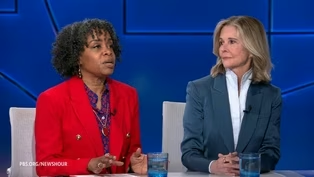
Atkins Stohr, Parker on Trump call to nationalize elections
Video has Closed Captions
Clip: 2/6/2026 | 10m 7s | Atkins Stohr and Parker on political fallout from Trump’s call to ‘nationalize’ elections (10m 7s)
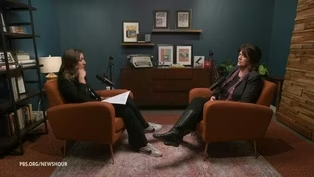
Christine Brennan on the Winter Olympics athletes to watch
Video has Closed Captions
Clip: 2/6/2026 | 6m 5s | Christine Brennan discusses the Winter Olympics athletes to watch on ‘Settle In’ (6m 5s)

How effective will TrumpRX be at lowering U.S. drug prices?
Video has Closed Captions
Clip: 2/6/2026 | 5m 58s | How effective will TrumpRX be at lowering prescription drug prices for Americans? (5m 58s)
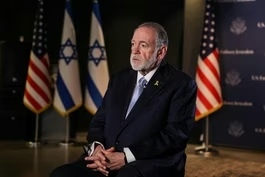
Mike Huckabee on what’s next for Gaza and the Middle East
Video has Closed Captions
Clip: 2/6/2026 | 7m 31s | One-on-one with Ambassador Huckabee on what’s next for Gaza and the Middle East (7m 31s)

News Wrap: Trump’s racist post about Obamas draws backlash
Video has Closed Captions
Clip: 2/6/2026 | 5m 41s | News Wrap: Trump’s racist social media post about the Obamas draws backlash (5m 41s)
Trump’s visa freeze upends work, life for many U.S. families
Video has Closed Captions
Clip: 2/6/2026 | 11m 15s | Trump administration’s visa freeze upends work and life for many U.S. families (11m 15s)

U.S. restarts nuclear diplomacy with Iran as threats rise
Video has Closed Captions
Clip: 2/6/2026 | 5m 22s | U.S. restarts nuclear diplomacy with Iran amid escalating threats. Here’s what to know (5m 22s)
Providing Support for PBS.org
Learn Moreabout PBS online sponsorship
- News and Public Affairs

FRONTLINE is investigative journalism that questions, explains and changes our world.

- News and Public Affairs

Amanpour and Company features conversations with leaders and decision makers.












Support for PBS provided by:
Major corporate funding for the PBS News Hour is provided by BDO, BNSF, Consumer Cellular, American Cruise Lines, and Raymond James. Funding for the PBS NewsHour Weekend is provided by...